
How the Williams County Court Calendar Works
Williams County runs its court calendar through a CivicEngage tool rather than a docket database. The county calendar lets you set Start Date and End Date fields. You can type a keyword and turn on a past-events option. Court categories cover Common Pleas, Juvenile, and Probate. You can switch among List, Week, and Month views. You can also print what you see, or push events to iCalendar.
For a Williams County court docket search by date, the filters matter most. The Williams County's calendar search page shows the court-category filters used to narrow published events.
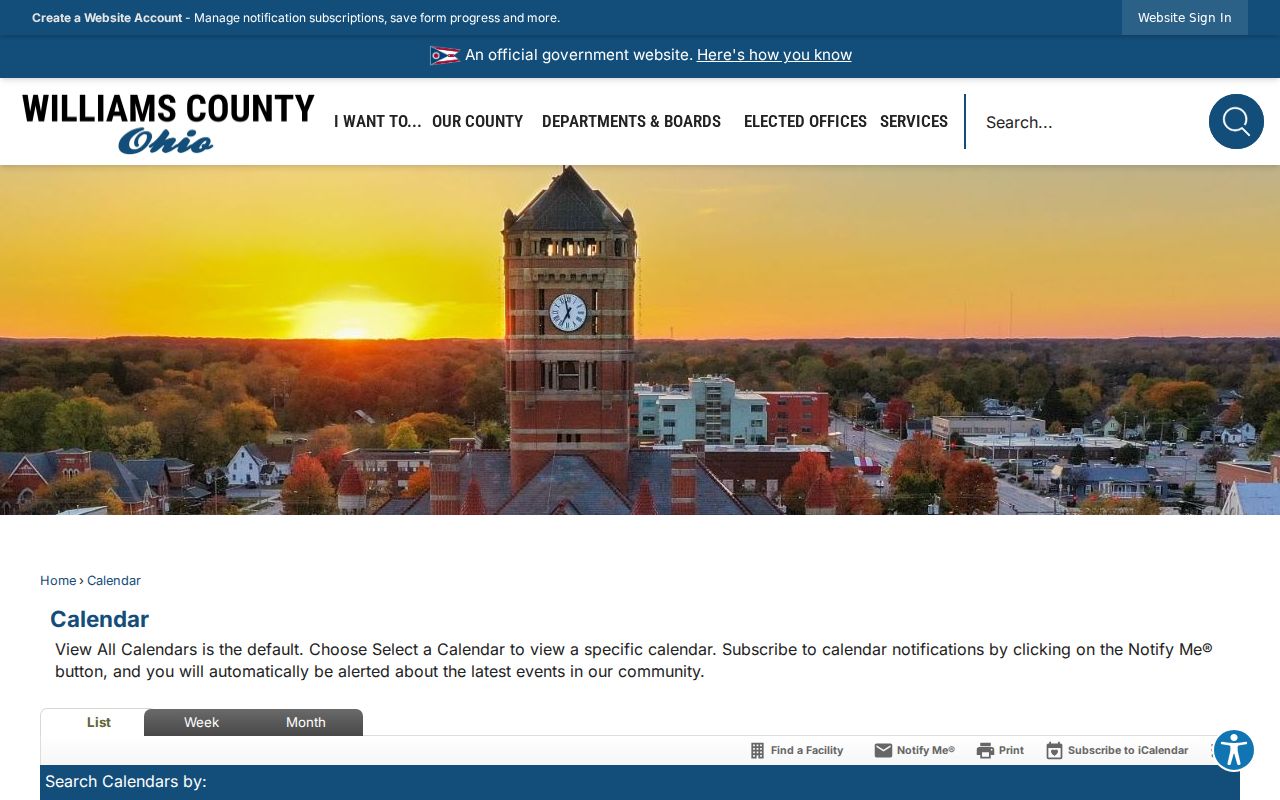
The county calendar is good for seeing listed court events. It is not a per-case calendar. It is not a case-number lookup either. A person tracking one case should start with the docket belonging to the correct court, treat the calendar as a related source, and confirm any current date through that court or its records counter. The two tools simply do different jobs. A calendar event tells you something was posted; a case docket tells you what happened in the file.
Williams County Court Calendar Filters
The filters exist to tame a long list of events. Set a date range, type a term, or pick one court calendar. A List, Week, or Month view then becomes far easier to read. The court options point to the Common Pleas, Juvenile, and Probate calendars. The past-events control helps when you want to check what was previously posted. Still, it cannot replace the current docket entry on an active case. A sensible sequence is to choose the court calendar and set the date window. Then scan the returned events. Print or save the view if it matters. Never use an event listing to guess a case number. Also never guess a next setting the court has not posted. The case docket remains the direct route to a person-specific court date. A call to the clerk works just as well. The Williams County iCalendar page provides the subscription and event-index access point.
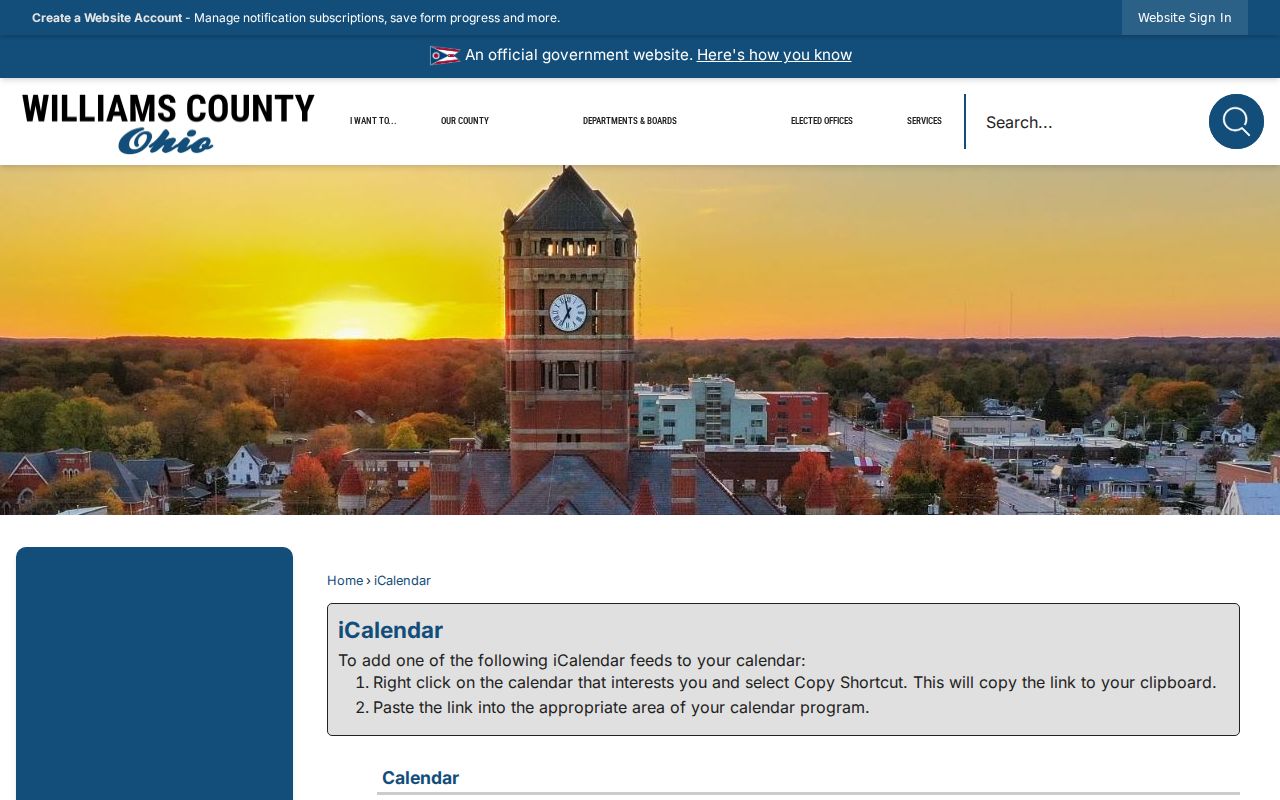
That page shows the calendar's subscription feature. It lets you carry a selected court calendar into a personal calendar tool.
Williams County Court Date Lookups
The reliable route to a court date depends on the court and the case type. Begin with the correct court's docket. Turn to the county calendar if it publishes a related event. Is the online record silent? Then call the court or visit its counter. For Bryan Municipal Court, the citation itself shows the date and time at the bottom of the ticket. The court's record search may display the setting once the court posts it.
- Identify the court from the notice, citation, or case type, then check that court's docket or record-search channel first.
- For a county event, use the Williams County calendar with its court selector, date range, search, and List, Week, or Month view.
- For Bryan Municipal Court, check the citation's date and time and the court's record-search page after any posting delay.
- Call the appropriate clerk or administrator: General and Domestic Relations at 419-636-2644, Probate at 419-636-1548, Juvenile at 419-636-2934, or Bryan Municipal Court at 419-636-6939.
- If the date remains uncertain, use the court counter, public terminal, or a written request for the maintained record.
Williams County Court Date Channels
Each channel answers a different question. The Common Pleas, Juvenile, or Probate calendar shows published events by court. A case docket follows a single file. A clerk or court administrator can point a caller to the maintained setting information. The counter, the public terminal, and the written-request route matter most when the online display is thin. They also matter when you must verify an entry rather than merely view it. The Bryan Municipal Court CaseLook consent page identifies the municipal record-search channel. That channel can show a posted setting.
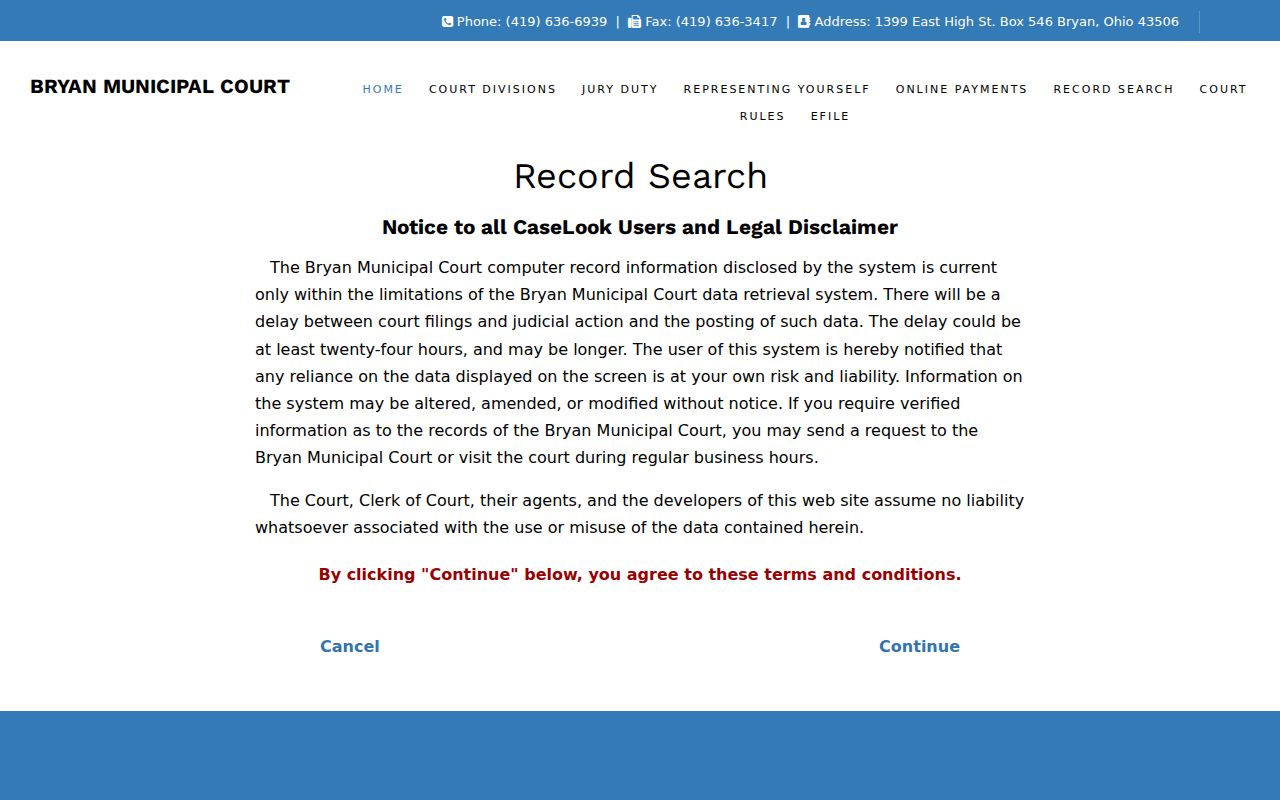
That notice explains why a current Bryan setting may still need confirmation through the court. The same goes for a public terminal or a written request. The practical chain is specific. Take the correct court docket first, the calendar second. A clerk or administrator call comes third. Then come the counter, the public terminal, or a written request. This order keeps a broad county calendar from being mistaken for a complete per-case schedule. It also reflects reality: a posted event can change. A recent change may not yet appear in every online channel.
Court Settings: What Each Field Means
A court setting is an event placed on the record for a stated purpose. Read all of its fields together. Date and time tell you when the court expects the event. The court or division tells you where the matter belongs. The setting type explains the work planned for that appearance. A docket entry may also flag a continuance or reset, which means the earlier setting should be checked against the newest entry before you rely on it.
| Date | The scheduled calendar date, subject to any later docketed change. |
|---|---|
| Time | The stated appearance time, which should be checked with the court if an update is pending. |
| Court or division | The court channel that owns the setting, such as Common Pleas, Probate, Juvenile, or Bryan Municipal Court. |
| Case or citation | The identifier that ties a setting to a particular court record. |
| Setting type | Describes whether the event is an arraignment, pretrial, motion hearing, trial, or other court action. |
Compare the field list against the most recent docket entry. A calendar shows a published event. The latest court record is the better confirmation when a date truly matters.
Williams County Court Calendar Terms
The setting label tells you what kind of appearance is planned. An arraignment is the early criminal appearance where a plea is addressed. A pretrial is a later conference or case-management setting. A motion hearing takes up a filed request. A ruling on it is a separate matter. A trial-to-court goes to the judge alone. A jury trial is set for a jury. A continuance or reset simply means the calendar date has moved.
- Arraignment
- An appearance connected to the charge and plea stage.
- Pretrial
- A scheduled court event before trial, often used to manage the case.
- Motion hearing
- A hearing on a filed request that asks the court to act.
- Continuance or reset
- A change from an existing court date to a later setting.
- Waiver payment
- A payment on an eligible matter that is treated as a guilty plea.
Context matters when you read these terms. The charge level and the court shape what happens next. At Bryan Municipal Court, first- and second-degree misdemeanors usually get a pretrial either at arraignment or right after a written not-guilty plea goes in. Other misdemeanor matters head to trial unless a pretrial is ordered or requested under the Bryan Municipal Court local rules.
When a Court Date Moves
A moved court date is itself a court-record event. The old setting might be continued, reset, or swapped for a new entry. In Bryan Municipal Court civil cases, pretrials are generally set within 30 days after responsive pleadings. Asking for a change is not the same as getting one. The docket, or confirmation from the court, tells you how the request actually turned out.
Local practice demands more than an oral request here. Under the rules, a request for a new date must be followed by a written motion and a proposed entry within five days. Until the court records the change, treat the existing setting as the date that counts. Rely on the latest entry. Do not rely on memory of a discussion or an old calendar view.
Williams County Court Date Changes
Online posting has real limits. Bryan Municipal Court's CaseLook information notes that updates can take at least 24 hours to appear. Once a hearing moves, give that window time to pass. Then run the court's record search again, and call or use the public terminal if the result stays unclear. That care matters most when the matter is close in time. It also matters when a citation still shows an earlier printed date.
The county calendar's event display gets revised too. A saved List, Week, Month, printout, or subscribed item may lag behind the current case setting. When you ask the clerk or administrator to verify a date, bring the court, the case or citation, and the most recent notice together. The aim is confirming the maintained record, not reconciling every public display on your own. A calendar update can trail a court change. So the clerk or court record is the safer check for a setting that may have moved.
Missed Settings and What Comes Next
Act quickly after a missed date. Check the correct court's docket once the posting interval has passed, then call the clerk or court administrator to learn the current status and the next step available. Bryan Municipal Court says an unavailable online payment must be handled in person. A missed matter can trigger a warrant or Bureau of Motor Vehicles action, so do not assume a later online payment screen settles things.
If counsel is on the case, counsel may need to address the setting. The court record and the clerk can show what was entered, while a licensed attorney can advise on the legal response. Never appear on a guessed date. Confirm the court, the case, and the current setting first.
Missed a setting? Check the current docket after the stated posting period and contact the court that owns the case without delay.
For a Bryan matter with no available online payment option, the court says payment must be made in person.
A warrant or Bureau of Motor Vehicles action could exist, so confirm the current record rather than relying on a prior notice.
Williams County Court Calendar Limits
The Williams County CivicEngage calendar is a public event tool, and a handy one. Its search, court selector, past-events control, print option, and iCalendar feature work well for published schedules. What it is not documented as is a per-case search engine or a case-number lookup. That limit is why an individual court date should be confirmed through the relevant docket and clerk channel. Guessing from a broad event view is not enough.
Bryan Municipal Court shows the same distinction from another angle. Its citation can show a date and time, and its record search may display the case setting. Its payment channel handles eligible waiver payments. Each piece does a different job. Use the court calendar for events, the docket for case activity, and the clerk or court for current verification. Bryan Municipal Court's payment page shows the court's online-payment information for eligible matters.
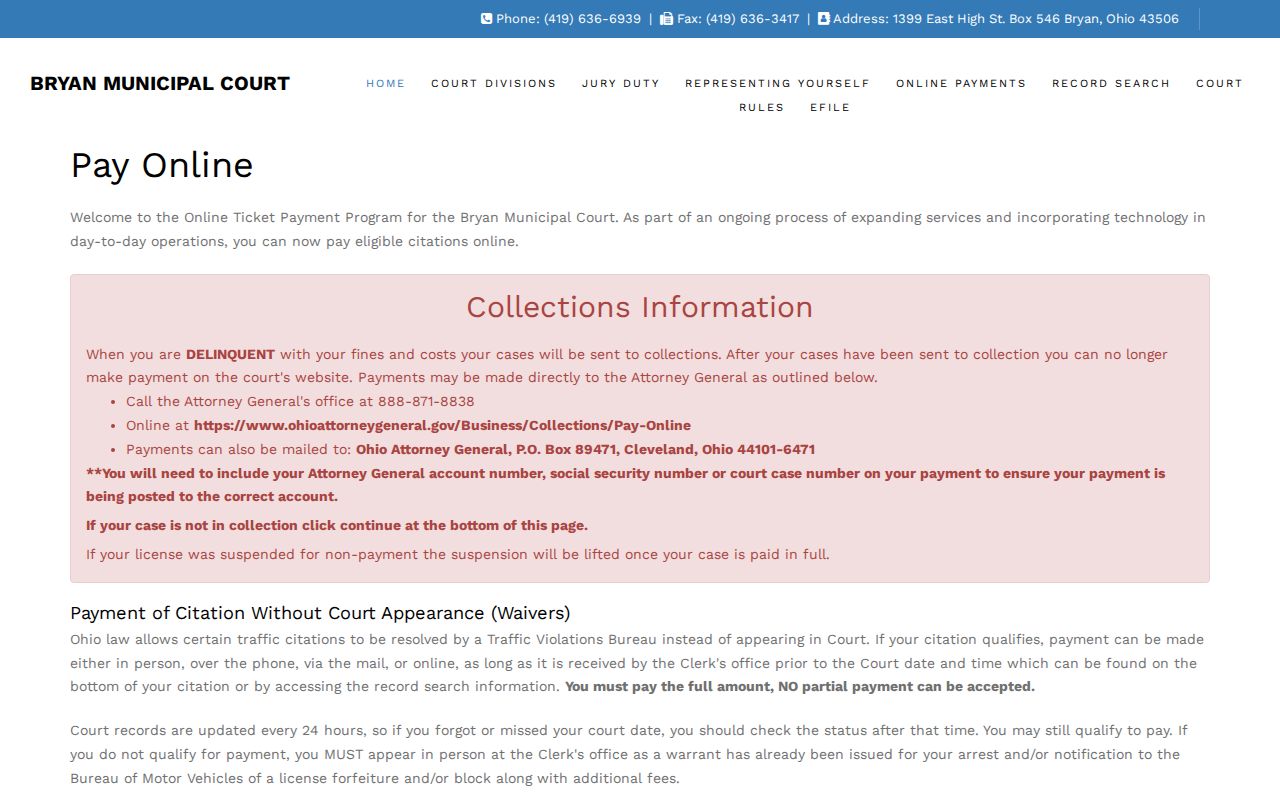
The payment screen is a separate court channel. It should not be confused with a case docket or the county event calendar.